
This year I had the good fortune to attend the first annual MLK Celebration Day hosted by Attorney Tom King in Houston, Texas. During this event, several judges discussed Dr. King's impact on how they view their role in the judicial process as well as how we lawyers can play a part in ensuring all citizens have access to justice when it matters.
This year, more than ever, Americans have watched the law impact people in real time. Illegal immigrants are being forcibly removed from their homes and workplaces. Protestors in Minneapolis are having violent face offs with federal law enforcement agents. Debates are being had about whether any of this is legal or even morally correct. One of the Texas judges (who I will not name) took some time during his speech to argue that it is the U.S. president's obligation to enforce the laws: immigration and naturalization laws have been in place for decades, and only recently has the executive made it a point to ensure those laws are carried out. He argued that, while it may not be a pretty sight, the removal of illegal aliens from our territory was for the benefit of U.S. citizens whose resources are inordinately used to support people who have no legal right to be here.
I was shocked that this judge used Martin Luther King Jr.'s birthday to bring this particular political point to bear, but I was also forced to reflect on how we got here: Dr. King fought for freedom and justice for all people. Today we are seeing some people being targeted based on their appearance, namely the color of their skin and nationality. Sometimes that targeting is justified, and other times the law is being used to simply harass and demean people. As we go into the month of February, my concern is that while strides have been made to legally recognize the achievements and contributions of my people, other aspects of society seem to be regressing, also under the color of law.
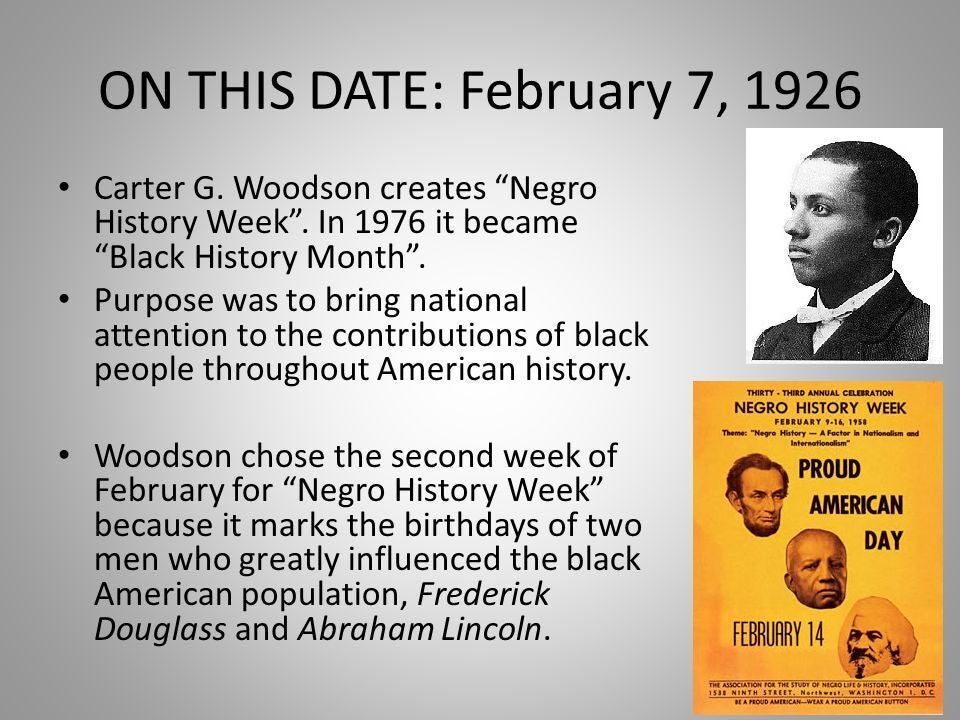
Historian Carter G. Woodson made it his life's mission to ensure that African Americans were known and acknowledged for their contributions, establishing Negro History Week in February 1926. After its widespread adoption at college campuses nationwide, this concept was expanded to the federally recognized Black History Month in 1976. A fifty (50) year struggle resulted in the veneration of long ignored and neglected pioneers and visionaries who shaped many developments in U.S. history.
What will future historians have to say about this era?


